

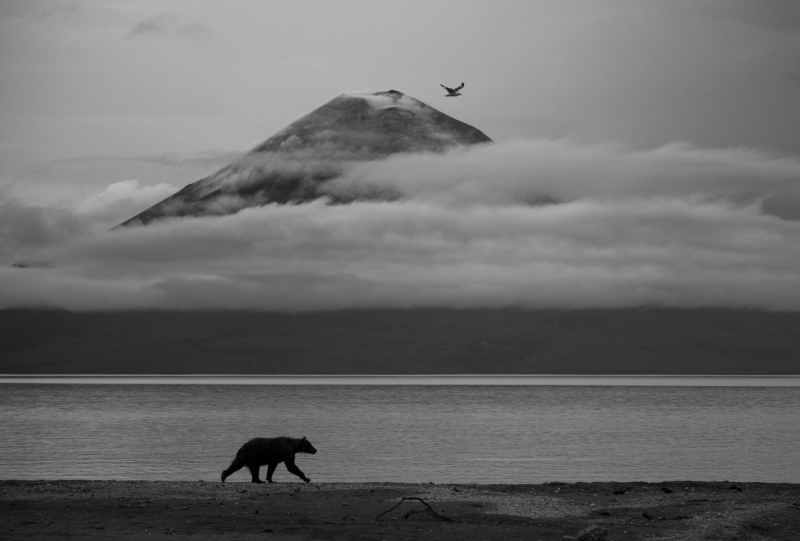
A lone brown bear strolls along the desolate shore of Kuril Lake, its stark silhouette set against the water, as the Iliinsky volcano emerges from the clouds and a slaty-backed gull flies past, perfectly aligned with its summit. Generally solitary, the bear is heading to join its kind in feasting on the sockeye salmon migrating upriver from July to September to spawn—a seasonal abundance that draws bears from across the remote wilderness of the Kamchatka Peninsula, in Russia's Far East. Kurile Lake, a caldera formed by the collapse of a volcanic crater, is the largest sockeye salmon spawning ground in Eurasia; its deep, cold waters serve as a vital cradle for life in this untamed landscape.