


The Terrorism Confinement Center (CECOT), a mega-prison that houses inmates from El Salvador’s three major gangs—Mara Salvatrucha (MS-13), Barrio 18 Revolucionarios, and Barrio 18 Sureños—is the largest prison in the Western Hemisphere. Built in a record-breaking span of six months, this maximum-security facility can house 40,000 inmates as part of the 'war on gangs' launched by President Nayib Bukele, who has been praised for ending gang violence and bringing security to his country. This reportage offers a rare look inside the prison and at the lives of gang members held in CECOT.


Masked ICE agents detain migrants at immigration court as part of Trump administration’s deportation plan. This series documents the consequences of the family separations caused by recent U.S. policies. The camera lens becomes a witness, revealing courtrooms transformed into sites of suffering. The political divide is deep: between those who protest, denouncing the lack of due process, and those who applaud. Thanks to the courage of those who allowed themselves to be photographed, it has been possible to give voice to stories that would otherwise have remained invisible.


China has recently emerged as the leader in renewable energy production and consumption. The country now generates over 40% of its electricity from renewable sources and is using this energy to replace petroleum-powered transportation. In 2025, it was the leading exporter of solar panels, wind turbines, rechargeable batteries, and electric vehicles, putting low-cost renewable energy within reach of the rest of the world. While China is still the largest emitter of greenhouse gases, those emissions have peaked and are now declining, offering hope that the dire consequences of climate change can be averted.


Across the globe, the systematic targeting of women’s bodies has become a grim strategy of war. This project focuses on the condition of Eritrean and Tigrayan women across three geopolitically interconnected countries: Eritrea, Ethiopia, and Sudan. In these regions, women have endured pervasive gender-based violence and have been affected by socio-political transitions, as well as ethnic and territorial conflicts. Their bodies have become sites of power assertion, used as instruments of war through systematic and organized violence. Yet, amid such suffering, these women have found the strength to come together. Many of them have collected evidence, testimonies, and documentation to bring to light a long-denied truth. Together, they are undergoing a profound transformation: shame has become resistance, fear has turned into solidarity, and wounds into words. From victims, they have become witnesses to the violations they endured and, with courage, have begun to seek justice and build paths of resilience, bringing their truth to light.


Two years of relentless bombardment, displacement, and starvation have devastated Gaza. Entire neighborhoods have been razed, schools reduced to rubble, and basic services—water, electricity, sanitation—have all but collapsed. Hundreds of thousands have been uprooted, communities lie in ruins, and hunger has become a daily reality. Families queue for scarce aid, children grow up amid trauma, and hospitals, where still standing, struggle to function. Yet amid the debris, loss, and constant danger, the resilience of Gaza’s people endures as they fight to survive, protect their families, and cling to hope, while the world bears witness to one of the gravest humanitarian crises of the 21st century.


Guatemala has the highest rate of chronic child malnutrition in Latin America—one in two children is affected. Driven by climate change and deep structural inequalities, the crisis is most acute in the 'Dry Corridor,' where malnutrition reaches 80% in some villages. Children affected in their first two years of life face permanent physical and cognitive limitations—a condition known as the “silent killer”—pushing thousands of families to migrate northward. Yet Indigenous Mayan communities—custodians of corn and centuries of agricultural knowledge—navigate food scarcity while remaining deeply connected to the land. Rooted in the Maya worldview, ancestral knowledge becomes a form of self-determination. Through agroecological practices and seed preservation, these communities work to secure food and maintain balance with their environment.


'Surviving the impossible' documents Cuba amid an ongoing humanitarian and economic crisis. By amplifying the voices of Cubans facing the collapse of their country, the project challenges stereotypes and focuses on those who have shared their most vulnerable moments. Nearly 90% of Cubans live in extreme poverty: by September 2024, over a million people lacked running water, most endured daily blackouts, and shortages of food, fuel, and medicine were widespread. Between 2022 and 2023, over a million people fled the island—the largest migration in Cuban history. Abandoned by their government and the international community, Cubans survive through resilience, mutual aid, and support from abroad. These images tell stories of those who refuse to give up and show how survival has become a collective act.


In his first year back in office, U.S. President Donald Trump moved quickly to reassert control over domestic and foreign policy through sweeping executive actions, efforts to reshape the federal government, and confrontational diplomacy with allies and rivals. His administration faced sustained legal challenges, internal turnover, and intense scrutiny. As Trump tested institutional norms and deepened political polarization, he governed at a relentless pace, drawing public attention to the physical demands and strain of the presidency during an often chaotic first year. An intimate look at the president’s political life and daily commitments through a frantic succession of rallies, flights, and days at the White House.
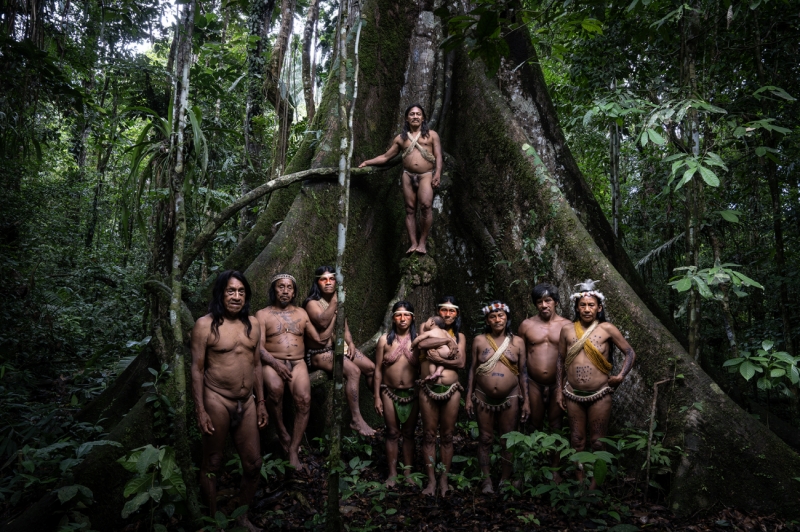


In February 2025, Ozge Elif immersed herself in the daily rhythms of Bameno, a remote Waorani community deep inside the Ecuadorian Amazon. Living alongside the community, she sought to capture an existence intimately shaped by rivers and forest—an ancestral world that feels far removed from modern life, yet faces the mounting pressures of oil extraction, deforestation, and encroachment. Through direct observation of their routines and struggles, this narrative reflects the Waorani’s resilience in protecting their culture and territory amidst accelerating ecological change, as their ancient knowledge and forest home come increasingly under threat.


The Syrian civil war, which began in 2011, lasted nearly 14 years, fueled by the opposition's struggle against the regime, the rise of jihadist groups, and the intervention of regional and international powers. Bombardments and siege tactics displaced millions, driving mass migration toward Turkey, Lebanon, Jordan, and Europe. Women and children paid the heaviest price, while the ongoing chaos also fueled the growth of ISIS. Following the fall of the Baathist regime, celebrations filled Damascus’s Umayyad Square, and the dark era of Sednaya prison came to an end, marking a new chapter for the Syrian people, who now face the immense challenge of rebuilding their country.


After a truce early in 2025 was repeatedly violated, Gaza endured mass displacement and a siege restricting essential supplies—pushing large segments of the population toward acute food insecurity and catastrophic living conditions. Despite a new ceasefire in October 2025 brokered by international actors, including the United States, which resulted in limited improvements in aid access, the stark consequences of the conflict and humanitarian crisis persist, and hopes for recovery have quickly given way to continued suffering.


In the rugged terrain of the Sky Islands, where Mexico and the United States meet in the states of Sonora and Arizona, the border wall fragments habitats and blocks ancient wildlife routes. Across the borderlands, private land stewards, Indigenous communities, conservation groups, scientists, and public agencies are working to restore the ecological integrity of this mountain–desert mosaic, securing wildlife corridors to keep animals moving, thereby offering a model for how divided landscapes can function again for wildlife and for people.


The Palestinian refugee camp of Yarmouk, once home to over 160,000 Palestinian refugees and 600,000 Syrians, was devastated by Syrian army bombardments, fighting, and a siege, which destroyed homes, streets, and community spaces. After the regime retook it in 2018, systematic looting erased any sense of normalcy. Some families have since returned—with more joining them after Assad’s fall, driven by the high cost of living in other districts of Damascus—only to find ruins, a lack of basic services, and an abandoned landscape.


This little island of two square miles in the middle of Detroit used to be known as 'Little Poland.' In 1970, Poles still were almost 90% of the population. Then, everything changed. Waves of immigrants poured into this tiny enclave swiftly transforming it into America's first majority Muslim city. Over the past three decades, many of the Polish residents migrated to the suburbs. Of those who stayed behind, feelings were mixed about how quickly their town changed. Some accepted it, grudgingly while others grew bitter as the world they knew disappeared.


Almost four years after Russia's full-scale invasion, Ukraine is today a nation deeply scarred by war. This brutal armed conflict has unleashed a humanitarian catastrophe on a scale unseen in Europe for decades. Cities and infrastructure have been obliterated, causing immense loss of life and widespread misery. Calculating the death toll of the war in Ukraine is extremely difficult due to the ongoing nature of the conflict. This story serves as a window into the unvarnished truth of conflict.


Once reduced to about 3,000 individuals, Australia’s saltwater crocodiles have rebounded to near pre-settlement numbers following a hunting ban. Their return as apex predators has led to more frequent encounters with humans, making careful management essential. Indigenous communities play a key role through the legally regulated harvesting of eggs and crocodile farming, supporting livelihoods in remote regions. This story examines how Australia balances the recovery of the world’s largest living reptile with the need for human safety.


Habitat loss and fragmentation are forcing giant anteaters to cross roads in search of resources, increasing their exposure to vehicle collisions because of their poor vision, slow movement, and reliance on their sense of smell. Research has identified critical collision hotspots and informed mitigation measures such as fencing and wildlife underpasses. In 2024, a government-approved mitigation plan was adopted for highway BR-262 in Mato Grosso do Sul, Brazil, to reduce wildlife–vehicle collisions. This underscores the urgent need for science-based action to prevent further losses of the species.


In November 2020, Tanner Martin was diagnosed with stage 4 colon cancer at the age of 25. Despite the grim diagnosis, he and his wife raced to have a baby. Tanner died at age 30, 41 days after the birth of his daughter. In 2025, more than 200,000 people in the United States ages 15 to 49 were expected to be newly diagnosed with cancer. Some researchers call them 'Generation C,' or 'Generation Cancer.' Cancer has long been seen as a disease of aging. But since 2000, the rate of new cancer diagnoses among people 50 or older has fallen by 11 percent. For those ages 15 to 49, it has climbed by 10 percent.


African grey parrots are among the world's most popular and most heavily trafficked pet birds. Prized for their intelligence, beauty, and ability to mimic human speech, they are captured from the wild by the thousands each year and sold into the exotic pet trade. Studies have compared their cognitive abilities to those of a young child. A single bird can sell for as much as $7,000, fueling poaching. Once widespread across West and Central Africa, African greys have vanished from much of their former range. In the Democratic Republic of the Congo (DRC), one of their last strongholds, poachers continue to capture wild parrots.


Gotas de fuego is a photographic series made in the cantinas of Oaxaca, born from quiet observation and a personal connection to the place. These spaces hold longing, separation, and fleeting encounters, echoing a song that casts alcohol as a metaphor for love. Time slows here; stories surface in gestures, light, and worn walls. Through patient, candid images and expressive color, the work sits between documentary and interpretation, listening rather than defining, and making room for the emotional weight of place and the quiet moments in between.


This series portrays moments from the lives of Roma children and young people in Northern Hungary, exploring the external and internal influences that shape their personalities and self-image. Family bonds and belonging play a central role in this community, making these themes essential to understanding the values and traditions that guide life there today. The project grows out of a long-term relationship with a small community in Nógrád County, including access to key family events.


A Mother’s Journey follows single mother Cyndie French and her 11-year-old son Derek Madsen through a year shaped by his diagnosis of neuroblastoma, a rare childhood cancer. Moving beyond hospitals, the story reveals the emotional and financial strain of caring for a dying child—job loss, anger, love, and resilience. At a time when cancer research and family support face shrinking funding under the Trump administration, telling these stories is vital. Though Derek died in 2006, the focus is not on his death, but on how he lived, guided by his mother’s unwavering devotion.


Pasung, the practice of shackling people with psychosocial disabilities, remains common in Indonesia despite being banned since 1977. The belief that mental illness is a curse or moral failing drives families to shamans or unregulated healing centers. Conditions are dire: people are chained in filthy, overcrowded spaces, forced to eat, sleep, and defecate where they are confined. Some receive unregulated drugs or shock therapy, leaving deep physical and psychological scars. Change requires not only funding and oversight but also breaking cycles of shame through education, compassion, and community outreach.


On April 26, 1986, reactor number four of the Chernobyl nuclear power plant exploded, contaminating large parts of Europe. On February 24, 2022, Russia invaded Ukraine through the Chernobyl exclusion zone, occupying the region. Following the retreat of Russian forces, the area was declared a military zone, completely off-limits to civilians. Today, the Chernobyl exclusion zone remains heavily militarized and mined to prevent potential future attacks by Russia. Currently, nine million people continue to live in regions with elevated levels of radioactivity, with eighty percent of the population suffering from various health conditions.


Gaza, two years after the war began, is defined by devastation. Neighborhoods have been reduced to rubble, families have been uprooted again and again, and hunger has become part of everyday life. Tens of thousands of Palestinians have died, and the majority of the population has been displaced at least once. Damaged infrastructure and limited access to aid have pushed parts of the territory into famine. Through these photographs, we see both the scale of the destruction and the quiet determination of people who wait in line for food, look for a safe place to shelter, and carry on despite one of the worst humanitarian emergencies of our time.


Homes, hospitals, and streets in Gaza lie in ruins, while entire communities have been driven from place to place in search of safety. The human toll is staggering: tens of thousands killed, and most residents displaced. As aid deliveries dwindle and food grows scarce, hunger has become a daily reality, and in some areas famine has been confirmed. These photographs document the physical wreckage, but also the perseverance of those who line up for a meal, look for shelter, and keep going through one of the most severe humanitarian crises of recent history.


When a Russian ballistic missile struck a playground in President Volodymyr Zelenskyy's hometown of Kryvyi Rih, Ukraine, Matviy Holovko's mother shielded him with her body just in time to save his life at the cost of her own. The type of Russian missile that struck the playground contains parts from American companies. The blast, considered the worst attack on children in the war, killed twenty people and shredded the eight-year-old's arm, leaving him to come to terms with a life without his mother and his lost limb.


Scenes in the United States as President Donald Trump returned to the White House in 2025. In his first days in office, he signed a slew of executive orders and began to make good on his campaign promises with sweeping changes. From handling immigration issues to changing the federal workforce and ending wars around the globe, his administration made efforts to fundamentally change the status quo. They also pushed to expand the powers of the presidency, and they spoke about him running for a third term in 2028.


This project tells the story of Ukrainian women who lost their husbands—soldiers killed in combat—and who have chosen to face grief by turning it into an act of continuity. Before leaving for the front, many soldiers had their sperm frozen in case they did not return. After their husbands' deaths, some widows decide to have a child through posthumous assisted reproduction. The work unfolds far from the front line and explores how war continues to shape intimacy, the female body, and the very idea of family, showing how new life can emerge from loss.